3. Toast the Chilies. Add your remaining oil to the hot pan. Toss in dried red chilies and stir-fry for about 30 seconds, or until they darken slightly and release a fragrant smoky aroma. Be cautious here—don’t let them burn, or bitterness creeps in.
Warm & Familiar Kung Pao Beef Recipe
There’s something so comforting about a dish that carries bold flavors without overwhelming you. This Kung Pao Beef Recipe is exactly that—a harmonious blend of spicy, sweet, and savory notes wrapped up in tender, thinly sliced sirloin. It’s one of those recipes I keep returning to when I want a home-cooked meal packed with personality but still straightforward enough for a weeknight.
What I love most is how quickly it comes together. You’ll notice the sizzle and aroma as the beef sears, the chilies toast, and garlic and ginger release their fragrance. These few moments build layers of flavor that come alive in every bite—each crisp-edged vegetable and crunchy peanut adds just the right texture contrast.
By the end, you have a vibrant dish that feels just a little indulgent, but is surprisingly easy to whip up. Whether you’re cooking for two or feeding a crowd, this Kung Pao Beef Recipe makes for a warm, satisfying meal that feels like a little celebration of everyday cooking.
🌟
Standout Details
Comfort meets flavor: Cozy, rich, and balanced.
Beginner-friendly: Clear steps built for real kitchens.
Flexible: Easy swaps for ingredients you already have.
Meal-prep happy: Stores well without losing texture.
Ingredient Breakdown
Sirloin beef (thinly sliced): Tender and quick-cooking; slicing against the grain keeps it juicy.
Vegetable oil: Choose high smoke-point oils like canola or peanut for proper searing.
Dried red chilies: Adds authentic heat and that signature smoky kick; can reduce quantity to adjust spice level.
Garlic & fresh ginger: Aromatic foundation that brightens and deepens flavor.
Red bell pepper and yellow onion: Provide crunch, sweetness, and color contrast.
Roasted peanuts: Toasty crunch you won’t want to skip; replace with cashews if preferred.
Green onions: Fresh garnish that lifts the dish.
Soy sauces (light & dark): For balanced saltiness and a touch of depth from dark soy.
Rice vinegar: Tangy brightness that cuts through richness.
Hoisin sauce: Adds subtle sweetness and complexity.
Sugar: Balances savory with a gentle sweetness; brown sugar deepens flavor.
Cornstarch: Thickens sauce for that glossy, clingy finish.
Water: To loosen the sauce and help it coat everything evenly.
Before You Start
Mis en place is your best friend here. Slice your beef, veggies, and aromatics before heating anything—this keeps the cooking swift so nothing overcooks. Have your sauce ready and whisked ahead of time; it thickens quickly once added to the pan. And remember to pat the beef dry for a better sear—wet meat steams instead of caramelizes.
🛎️
Kitchen Setup
The tools that make Kung Pao Beef Recipe easier, faster, and cleaner—plus optional add-ons if you love efficiency.
How to Make Kung Pao Beef Recipe
1. Prepare the Sauce. Whisk together soy sauces, rice vinegar, hoisin, sugar, water, and cornstarch in a small bowl until smooth. This mix is your flavor powerhouse. Make sure no lumps remain so the sauce thickens evenly later.
2. Sear the Beef. Heat 1 tablespoon of oil in a wok or large skillet over high heat until it just starts to smoke—that’s the sweet spot for a good sear. Add the beef in a single layer; hearing that first sizzle always makes me smile. Let it sit undisturbed for about a minute before tossing. Cook 2–3 minutes until browned but not quite done through. This step locks in juices and builds a caramelized crust essential for flavor. Remove beef and set aside.
3. Toast the Chilies. Add your remaining oil to the hot pan. Toss in dried red chilies and stir-fry for about 30 seconds, or until they darken slightly and release a fragrant smoky aroma. Be cautious here—don’t let them burn, or bitterness creeps in.
4. Cook Aromatics & Veggies. Quickly add minced garlic and ginger, stirring constantly for about 20 seconds until fragrant. Then toss in sliced onions and bell peppers. Stir-fry 2–3 minutes until they’re just crisp-tender, keeping that pleasing snap for texture contrast.
🎯
Cook Like a Pro
High heat is your ally here—don’t shy away from it. Quick, hot cooking locks in beef’s natural juices and keeps veggies crisp. Keep ingredients moving in the pan; anything left too long risks drying out or burning. Also, whisk your sauce again right before adding—it may settle during waiting, and you want even texture.
5. Combine Everything. Return the seared beef and its juices to the pan. Give the sauce a quick whisk once more, then pour it evenly over the stir-fry. Sprinkle in roasted peanuts and stir-fry for 1–2 minutes. Watch closely as the sauce thickens into a glossy coating that clings beautifully to every piece—this is the moment all those flavors marry perfectly.
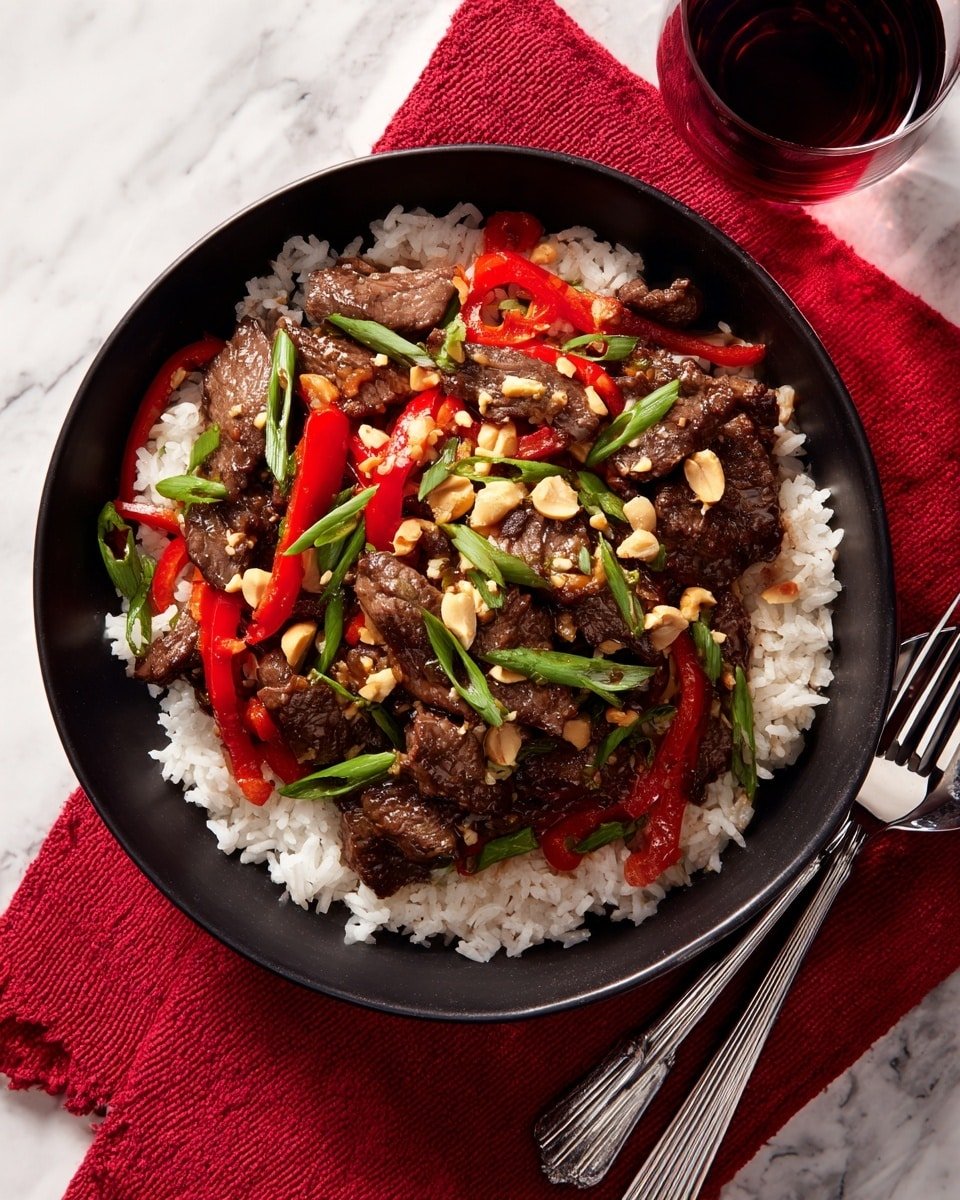
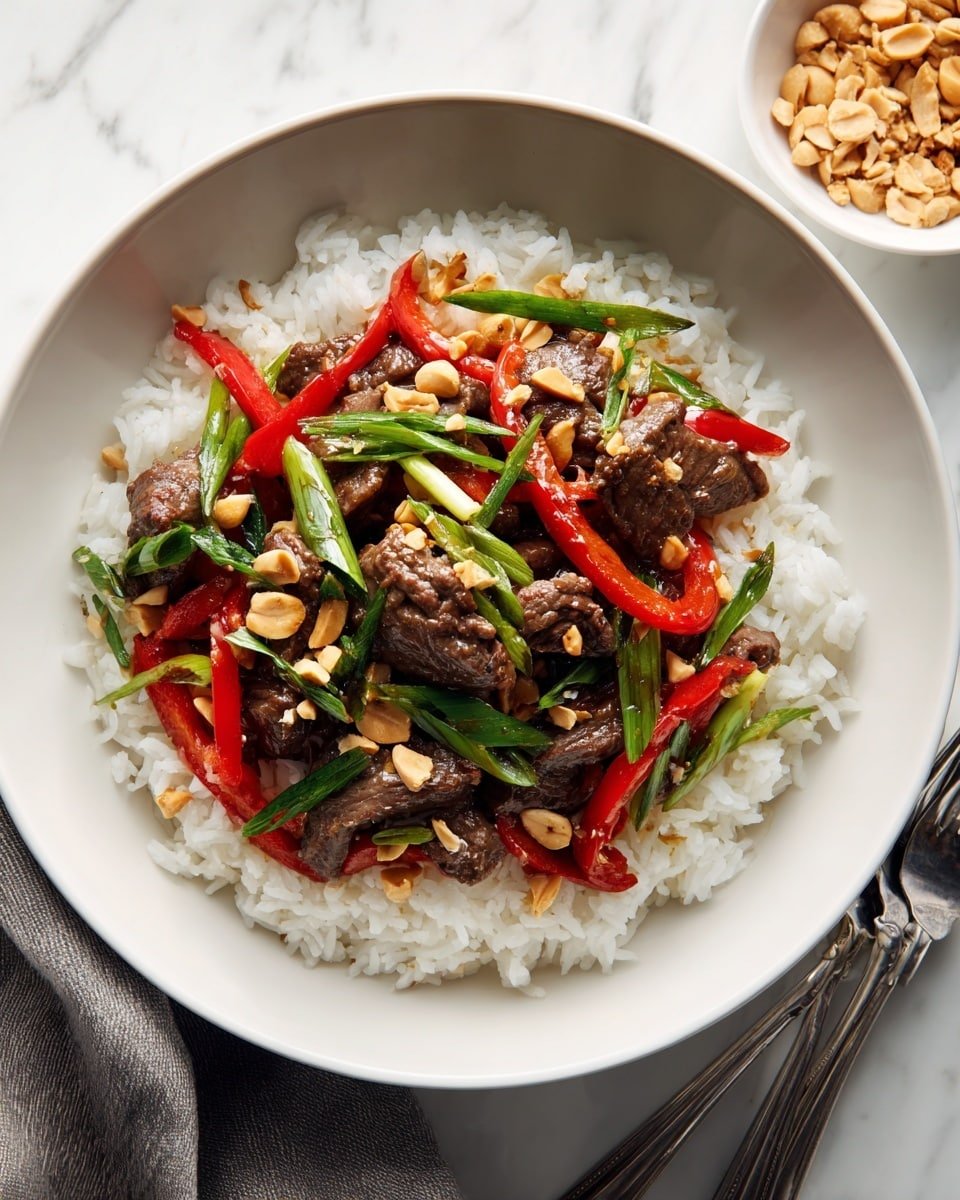
6. Serve. Transfer the Kung Pao beef to a warm platter and sprinkle chopped green onions over the top for a fresh burst. I love serving it alongside fluffy steamed jasmine rice; it soaks up that velvety, spicy sauce like a dream.
Flavor Variations for Kung Pao Beef Recipe
Mild but aromatic: Reduce dried chilies and add a splash of orange juice for a citrus twist that softens the heat.
Nutty Upgrade: Swap roasted peanuts for cashews or toasted sesame seeds to change the texture and flavor.
Veggie Boost: Throw in snap peas or water chestnuts for crunch and freshness.
Sweet & Spicy: Drizzle a bit of honey or maple syrup into your sauce for a richer, more complex sweetness.
Smoky Depth: Add a teaspoon of smoked paprika or a dash of liquid smoke to the sauce for an earthy, smoky undertone.
Ginger Punch: Double the ginger amount if you want that zesty freshness to shine.
Storage, Freezer & Reheat Tips
Refrigeration: Store leftovers in an airtight container for up to 3 days. The beef might soften a bit but still tastes fantastic.
Freezing: This recipe freezes well for up to 2 months. Cool completely before freezing to preserve texture.
Reheating: Reheat gently in a skillet over medium heat or in the microwave covered with a damp paper towel to prevent drying.
Freshen Up: Add a splash of water or a squeeze of fresh lime when reheating to brighten flavors and loosen sauce.
Kung Pao Beef Recipe FAQs
Q: Can I use other cuts of beef?
A: Absolutely! Flank steak or skirt steak work well as long as you slice thinly against the grain. Tougher cuts need longer marination or cooking times, which changes the texture.
Q: What if I don’t have hoisin sauce?
A: A mix of soy sauce and a bit of miso or plum sauce can mimic hoisin’s sweet-savory profile. Or simply leave it out and add a touch more sugar.
Q: Can I reduce the heat?
A: Yes! Simply remove some or all of the dried chilies, or seed them if you want milder spice. The recipe still keeps wonderful flavor without the heat.
Q: Is this recipe gluten-free?
A: Swap regular soy sauce for tamari or coconut aminos, and double-check your hoisin or substitute with a gluten-free alternative.
Q: Can I meal prep Kung Pao Beef Recipe in advance?
A: Sure! The flavors deepen overnight, making for easy lunches or dinners. Just keep fresh garnishes separate until serving.