My sister got a private education, a brand-new car at sixteen, and expensive vacations every summer.
I got a part-time job at fifteen, a secondhand backpack, and a lifetime of hearing, “”Your sister needs it more.””
I never complained. I never begged. I simply worked harder, saved every dollar, and built a life nobody in my family knew anything about.
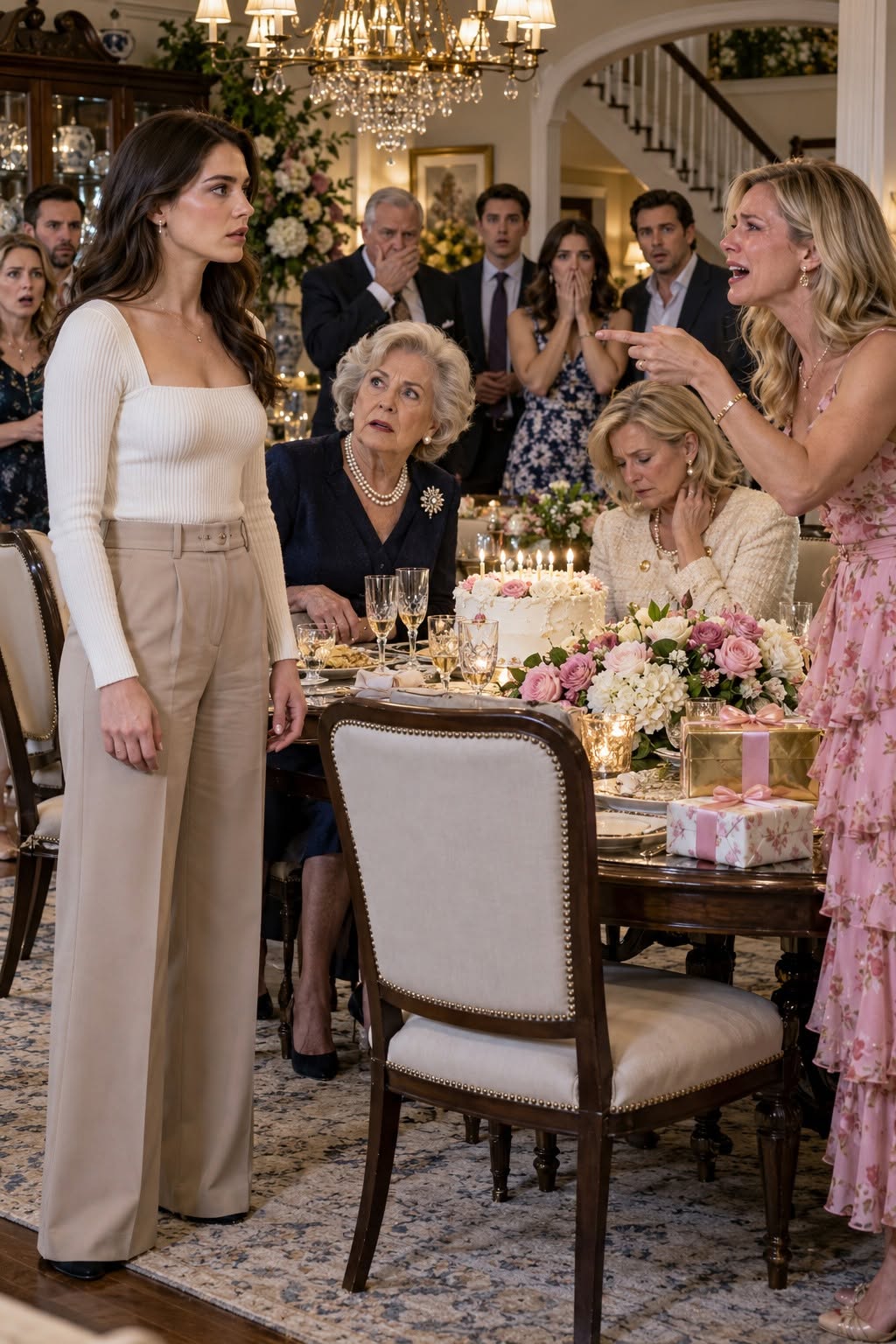
Then, at Grandma’s birthday party, my sister discovered I’d bought an apartment in Manhattan.
She burst into tears.
“”WHY DOES SHE GET THAT AND I DON’T?””
Everyone turned toward my mother.
But instead of defending me, Mom went pale, lowered her eyes, and refused to speak.
That was the moment I realized my childhood hadn’t just been unfair.
Someone had been hiding something from me for twenty-nine years.
My name is Lauren Hale, and I grew up in Westchester County, New York, in a comfortable house with cedar shutters, a finished basement, and a kitchen my mother remodeled twice.
We weren’t millionaires, but money was never a problem when it came to my older sister, Madison.
Madison attended Bellamy Academy, an expensive private school. I attended public school, carrying the same backpack until its strap literally fell apart.
Whenever I questioned the difference, Mom repeated her favorite explanation.
“”Your sister has different needs, Lauren.””
Apparently, those needs included ballet classes, private tutors, summer programs in Vermont, a new laptop, therapy, and expensive SAT preparation.
Mine didn’t even include art lessons.
For Madison’s sixteenth birthday, my parents surprised her with a white Volkswagen, complete with a giant red bow.
For mine, Dad quietly slipped fifty dollars inside a birthday card.
Mom promised we’d discuss getting me a car the following year.
We never did.
Instead, I spent Dad’s fifty dollars on a graphing calculator for AP Statistics.
Two weeks later, Madison scratched her Volkswagen against a parking garage pillar.
Mom paid the insurance deductible without hesitation.
That was when I stopped expecting fairness.
At fifteen, I’d already started working at Bellini’s, a neighborhood Italian restaurant.
I cleared tables, rolled silverware, refilled water glasses, and came home smelling like garlic and dish soap.
My first paycheck was $91.18.
I stared at that number for nearly ten minutes.
For the first time, I had something that belonged entirely to me.
Madison, meanwhile, lived in a different universe.
She borrowed my clothes without asking, complained about shampoo brands, and once told me I was “”lucky”” I didn’t attend her private school because the pressure was unbearable.
She said this three days before flying to Florida with her friends for spring break.
I spent that Easter Sunday working a double shift.
Dad occasionally tried to intervene.
“”Maybe we should put some money aside for Lauren, too,”” he’d suggest.
Mom always had an answer.
“”Madison is struggling.””
“”Madison needs extra support.””
“”Madison has opportunities we can’t afford to waste.””
Eventually, Dad would fall silent.
And so would I.
I began recording everything in a notebook: paychecks, expenses, scholarship deadlines, grades, savings.
Numbers became my safe place.
Unlike my family, they didn’t change the rules depending on who was asking.
I graduated near the top of my class and earned a substantial scholarship to Binghamton University.
Madison had already left for college in Boston, with my parents paying her tuition, housing, meals, and spending money.
When I showed Mom my acceptance letter, she smiled.
“”That’s wonderful, honey. We knew you’d figure something out.””
Those words stayed with me.
They weren’t proud that I’d succeeded. They were relieved they hadn’t needed to help.
Through college, I worked weekends, tutored accounting and economics, and eventually bartended.
I majored in finance because I’d spent my entire childhood watching my parents use money to determine someone’s worth.
Madison graduated with a communications degree, moved home, and received five thousand dollars in “”launch money”” when she finally found a marketing job.
My parents also bought her professional clothes and paid her apartment deposit.
When I graduated with honors and secured an analyst position in New York, Dad came to help me move.
Mom couldn’t attend.
Madison was having relationship problems.
As Dad loaded my boxes into his truck, he smiled sadly.
“”You never make us worry about you, Lauren.””
He intended it as a compliment.
But all I heard was, “”You made neglecting you easy.””
My first New York apartment was a crowded four-bedroom walk-up in Washington Heights.
The heating barely worked, the bathroom door wouldn’t close, and my roommates survived mostly on cereal.
I loved every inch of it.
Nobody could tell me I didn’t deserve to be there.
Over the next six years, I worked relentlessly.
I saved, invested, earned promotions, changed firms, and eventually became a senior analyst.
By twenty-seven, I was earning more than anyone in my family suspected.
I deliberately kept that information private.





